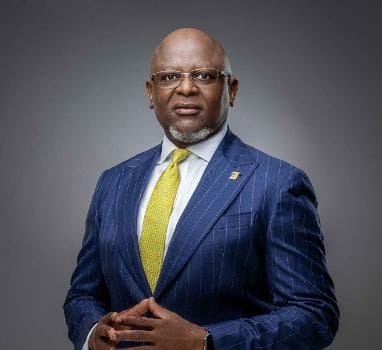
FirstBank: Really First, Records 130 Years of Enabling Business Succes
By Chigozie Marquis
In a country with short-lived corporate excellence and a handful of centenary companies, hitting 130 years is undoubtedly a significant milestone for Nigeria’s premier financial institution, FirstBank.

Experience, they say, comes with age. Nothing else aptly defines the consistent growth of First Bank of Nigeria Limited (FirstBank) and its consistent reinvention as the conscience of corporate Nigeria in the face of rising competition from traditional and other shadow banking brands.
Not many living Nigerians can list a single other existing Nigerian company founded in 1894, long before modern Nigeria was created. But FirstBank has not only survived the long 13 decades during which it etched itself into the socio-economic fabric of the country and created a niche as Nigeria’s banker, but it has also pushed itself into the frontier of financial technology evolution, making an inroad into the consciousness of tech-savvy Nigerian youths and the upwardly mobile banking public.
For an organisation that has stuck to Nigeria through thick and thin and enjoyed the monopoly of banking the country from the cradle, long before Africa tasted the beauty of financial system evolution, FirstBank could have been a dinosaur. That would have been easy. But it has chosen the tougher option; challenging traditions, breaking new ground, and constantly refreshing its operational template to stay ahead of the curve.
Established in 1894 as British Bank of West Africa (BBWA) by the late Sir Alfred Lewis Jones, a shipping magnate, FirstBank has been at the forefront of Nigeria’s economic growth and development through its superior banking services and social investments across sectors – manufacturing, small and medium scale enterprise (SMEs), agriculture, oil and gas and just about every other sector that has contributed to the country’s economic discovery.
The history of FirstBank is the history of Nigeria. At some point in its history, it even served as Nigeria’s Central Bank. Today, as the undisputed leader of the country’s brick-and-mortar banking, its nearly 800 business locations across the country give it robust presence in every local government across the nation.
Of course, in an era of ‘click’ banking, no financial institution is assessed by the strength of its physical banking network alone. Interestingly, the premier institution understands this logic, hence it has emerged as a force in continuously investing in cutting-edge financial technologies.
For one, FirstMobile, its digital banking application, has also become a household name in the financial technology ecosystem. In 2015, when the platform was still at its infancy stage, its user base was about 60,000, a number that has soared to over six million (a growth of over 10,000%) as of last year. That has contributed immensely to its changed perception from traditional bank to innovative digital bank. Today, about 85 per cent of its transactions are initiated via digital platforms, according to insights provided by the bank in its public statements.
FirstMobile appears to have hit the bull’s eye in the bank’s reinvention drive and efforts to appeal to younger demographics. But the platform itself is only one of the potpourri of telecommunications-driven initiatives it has taken on to get young depositors on board. FirstOnline users have also grown from about 90,000 to over one million in less than a decade just as its USSD banking, which targets feature phone users, is even more successful with users increasing by close to 3,000 per cent in the last eight years, to about 15 million.
Last year alone, its Firstmonie Agent banking services processed over ₦1.1 trillion in transactions, more than double the amount handled by seven other big banks. Some of its strategic investments in technology include the development of its smart and interactive transaction banking platform known as FirstDirect2.0 and the introduction of the humanoid robot to the banking ecosystem in the country. The smart banking initiatives have been complemented by its Digital Xperience Centres (DXC) which are currently located in Lagos, Ibadan, and Abuja with plans to open more across the nation.
Overall, its digital banking has evolved in both volume and public perception even with artificial intelligence-driven commercials complementing its digital imprints. Ease, convenience and reliability created in recent years have moved the customer base from 0.6 million in 2015 to well over 42 million customer accounts as of 2023. This number, according to the Chief Executive Officer of FirstBank Group, Dr Adesola Adeduntan, during an interview with The Guardian last year, would double in no distant future as the organisation migrates aggressively to transaction-led banking. In September 2023 the bank’s non-interest income hit ₦293.0 billion, up 111.6% in comparison to September 2022 at ₦138.5 billion validating the bank’s commitment to a transaction-based era.
In addition, the number of users on the Bank’s digital channels has grown from about 600,000 users in 2015 to over 23.2 million users in 2023.
On the back of the extensive technology infrastructure overhaul FirstBank embarked on under Adeduntan’s leadership.
Culled from Guardian