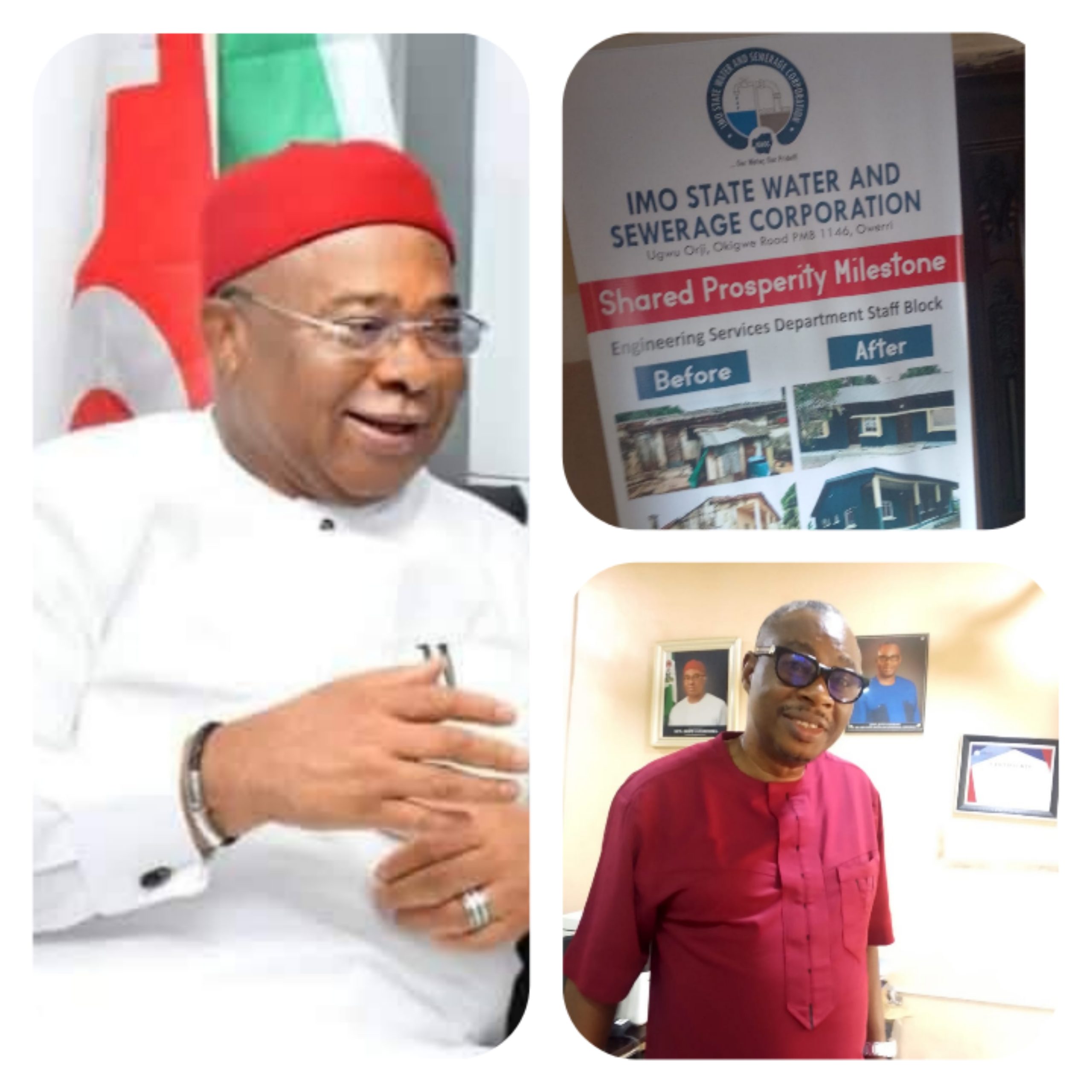
Imo Water Coporation Seeks Government Intervention Amid Infrastructure Challenges
By Anselem Anokwute, Owerri
The General Manager of the Imo State Water and Sewerage Coporation, Engr. Peter Chukwuma, has raised concerns over the ongoing destruction of water infrastructure across the state, attributing much of the damage to uncoordinated construction works in Owerri and other areas.
Speaking to some Senior Journalists in Owerri, Engr. Chukwuma commended Governor Hope Uzodimma for attracting the World Bank-assisted “Sustainable Urban and Rural Water Supply, Sanitation and Hygiene” (SURWASH) project to the state.
He emphasized, however, that while the project is being awaited and will be supervised by the Federal Ministry of Water Resources, immediate government intervention is needed to address the deteriorating condition of the water system.
“The infrastructure we are working with is over 40 years old, dating back to the administration of the late Governor Sam Mbakwe,” he explained. “Years of neglect, compounded by recent construction activities—especially road projects—have severely disrupted our water channels, many of which now lie beneath newly constructed roads.”
Engr. Chukwuma further revealed that some water facilities, such as the Otamiri Water Supply System, have been compromised by the ongoing balloon flood control project from the Chukwuma Nwaoha drainage channel. This, he said, has led to contamination of surface water sources, endangering the quality of potable water available to residents.
“Our fear is that continued pollution might damage the Otamiri River, which remains the primary surface water source for Owerri,” he said. “Yes, we have the technology to purify even septic water, but the cost of treatment and chemicals is extremely high.”
He criticized contractors for failing to follow due process, including environmental impact assessments, before embarking on large-scale construction. “In advanced countries, all relevant agencies are consulted before major projects begin. Here, construction proceeds without considering the impact on critical infrastructure such as water supply systems,” he said.
Despite these challenges, Engr. Chukwuma maintained that the Imo Water Corporation is doing its best with the limited resources available. He highlighted that regional water stations in Eke Nguru Mbaise, Orlu, Okigwe, and Egbeada are still functional but require regular maintenance, adequate chemical supply, and constant electricity.
He also lamented the high electricity tariffs imposed by the power company, noting that the Coporation is categorized under the Grade A billing system, which significantly increases operational costs.
“We are working, but we urgently need government support to maintain, rehabilitate, and expand our treatment, transmission, and distribution infrastructure,” he concluded. “With proper assistance, we can ensure sustainable and safe water supply for all parts of Imo State.”