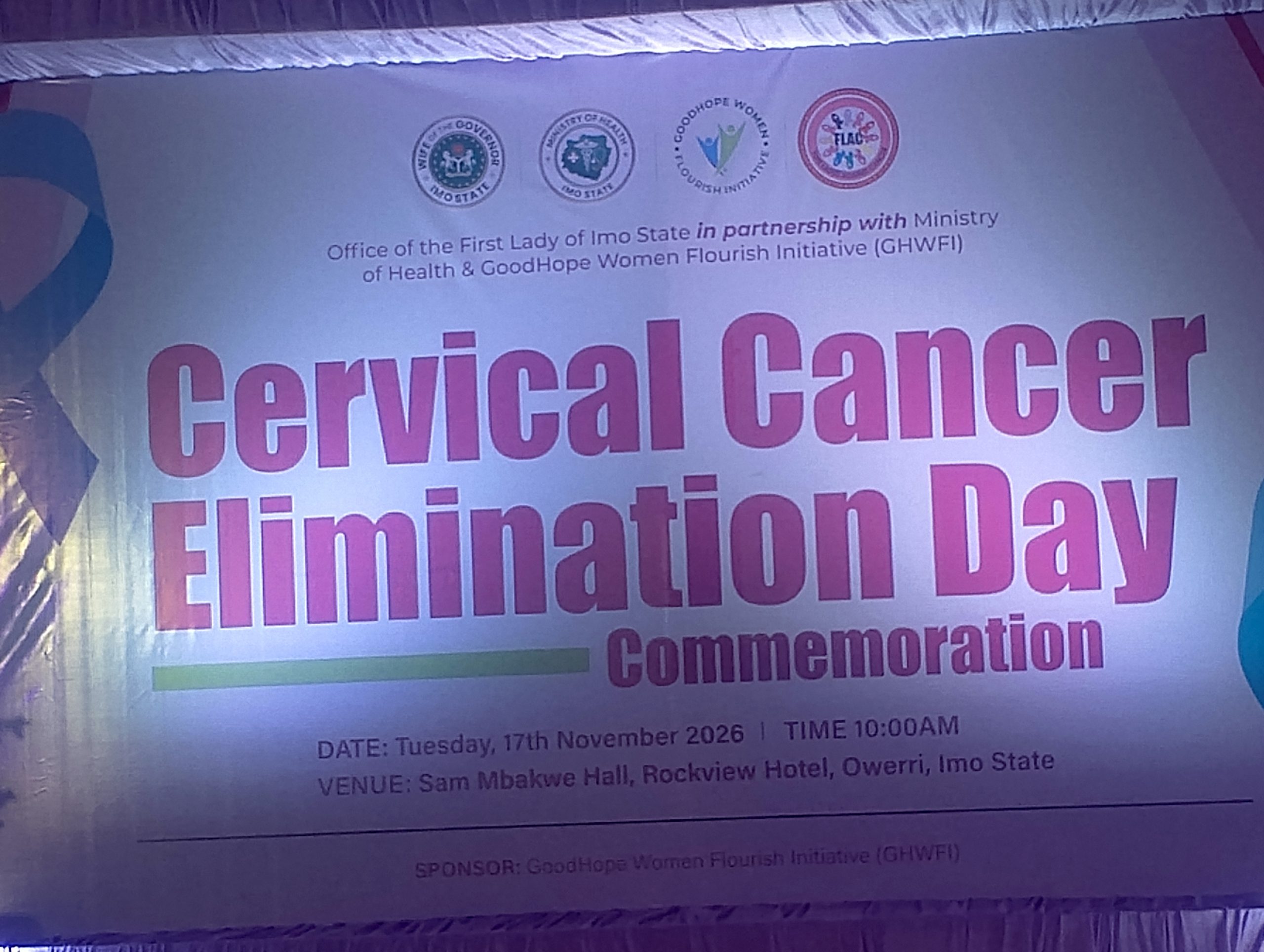
Imo Health Commissioner Tasks Traditional Rulers, Religious Leaders, Community Leaders on Cervical Cancer Awareness
938 Women Screened, 68 Test Positive as Government Intensifies Elimination Campaign
By Anselem Anokwute
The Imo State Commissioner for Health and Social Services, Dr. Chioma Vivian Egu, has called on traditional rulers, religious organisations, community leaders and other stakeholders across the state to intensify public awareness and mobilise their people to take advantage of the state government’s ongoing cervical cancer screening and treatment programme.
Dr. Egu made the appeal on Tuesday, November 17, 2026, during the state’s Cervical Cancer Elimination Day celebration, where she disclosed that 938 women had so far been screened under the ongoing Cervical Cancer Elimination Programme, with 68 testing positive and currently receiving medical attention.
The Commissioner reaffirmed the Imo State Government’s commitment to the global and national target of eliminating cervical cancer as a public health problem by 2030, noting that achieving the objective requires sustained public enlightenment, Human Papillomavirus (HPV) vaccination, regular screening and prompt treatment.
She explained that the administration of Governor Hope Uzodimma, with the strategic advocacy and support of the Wife of the Governor, Barr. Mrs. Chioma Uzodimma, had taken deliberate steps towards implementing the National Cervical Cancer Elimination Strategy in the state.
According to her, the programme focuses on community mobilisation, healthcare workforce development and HPV-based screening to ensure that more women have access to early detection and appropriate medical intervention.
Dr. Egu particularly emphasised the importance of traditional institutions, churches, community-based organisations and other grassroots structures in spreading the message, urging their leaders to encourage women to undergo screening rather than wait until symptoms develop.
Giving an update on the programme’s implementation, the Commissioner disclosed that all 11 designated screening facilities across the state had been activated, while 14 state-level master trainers had successfully completed training in HPV-based screening, Visual Inspection with Acetic Acid (VIA) and specimen handling.
She added that arrangements were underway to extend the training to healthcare workers in the remaining 16 local government areas in the first quarter of 2027 to strengthen service delivery and expand access to screening facilities.
Providing further details on the programme’s achievements, Dr. Egu revealed that out of the 938 women screened, 827 samples had been transported to testing laboratories, while 447 had been analysed, with all corresponding results returned.
She stated that 68 women tested positive and were accessing medical care, while five clients with positive screening results had been referred for further medical attention.
The Commissioner, however, identified laboratory logistics, delays in receiving test results and challenges in linking patients to appropriate treatment as some of the operational difficulties affecting the programme.
She assured that the Ministry was addressing the challenges through improved specimen transportation, the introduction of a Laboratory Information Management System and strengthened patient-tracking mechanisms to ensure that women who test positive receive timely medical attention.
Dr. Egu commended the Wife of the Governor, Barr. Mrs. Chioma Uzodimma, the GoodHope Women Flourish Initiative, the Federal Ministry of Health and Social Welfare, the National Task Force on Cervical Cancer Elimination and development partners, particularly CHAI, Roche, PECCIN and CMS, for their contributions towards the implementation and success of the programme.
She reiterated the Ministry’s commitment to expanding cervical cancer screening and treatment services, improving laboratory efficiency, completing healthcare workforce training and intensifying community sensitisation across the state.
The Health Commissioner urged women across Imo State to take advantage of the available screening services, stressing that cervical cancer screening should not be delayed until symptoms appear.
She maintained that early detection provides an opportunity for timely medical intervention and treatment, thereby reducing the risk of complications and preventable deaths.
She also appealed to parents and guardians to support HPV vaccination for eligible girls, while encouraging healthcare professionals, traditional rulers, religious leaders, community stakeholders and development partners to sustain their commitment to the elimination campaign.
Dr. Egu stressed that the success of the initiative would ultimately be measured by the number of girls vaccinated, women screened, patients treated and lives saved.
She expressed optimism that with sustained government commitment, effective collaboration among stakeholders and increased community participation, Imo State would make significant progress towards achieving the 2030 cervical cancer elimination target.